
A perspective from Scale Solutions Group on the change management work that transforms merger intentions into lasting outcomes
A recently published guide from West Monroe, “Maximizing M&A Integration Value for Regional and Community Banks” offers one of the clearest frameworks we’ve seen for what it takes to execute a successful bank merger. The guide outlines four critical pillars of integration success:
Each pillar matters. But one of them is different from the others and it’s the one that most integration plans under support, under plan, and underestimate.
Aligning people, behaviors, and ways of working is not a workstream. It is the load-bearing structure that determines whether everything else holds.
West Monroe puts it plainly: “Culture isn’t about making everyone feel good. It’s about aligning leadership behaviors, decision norms, and operating methods so the combined institution can actually execute.” They go further, noting that cultural missteps in an environment where community banks are already stretched on talent and compliance costs aren’t just costly – they become existential threats.
We agree. And we would add this: the institutions that treat the people pillar with the same rigor and intentionality they bring to their core system conversion are the ones that deliver on the synergies they promised.
Here is what that rigor looks like, and why it requires a different kind of advisory partnership than most integration teams know.
Brené Brown’s book Strong Ground offers a framework she calls the Anatomy of Transformation, and its foundational premise speaks directly to what makes the people pillar so difficult to execute well.
Brown argues that real transformations are:
They cannot be project-managed like data migration. And at the core, they are relational, led by leaders who are willing to model new mindsets and new ways of working, not just mandate them to the newly combined organization.
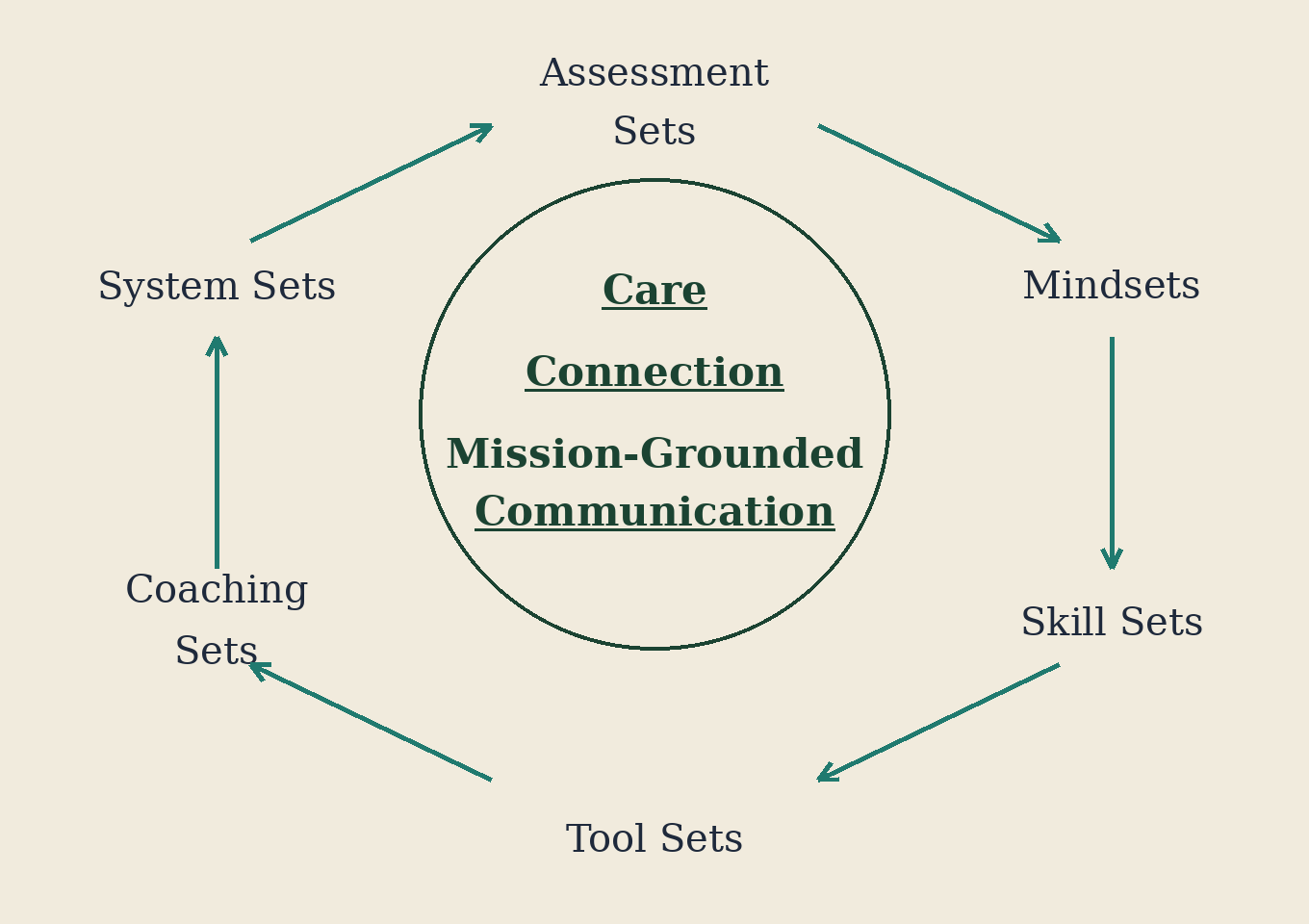
This distinction matters in the context of a bank merger. A new core banking platform can be configured, tested, and deployed. A new set of shared values and decision-making norms cannot be installed. They must be built through consistent leadership behavior, through genuine care for the people navigating the change, and through what Brown calls mission-grounded communication.
Most integration plans mistake communication for transformation. Town halls, announcement emails, and branded integration websites are not transformation. They are information delivery. Transformation requires sustained engagement. The kind that meets people where they are, acknowledges what they are losing, and builds genuine belief in where the combined institution is going.
Brown is also clear about the inherent paradox inside any real transformation. You are simultaneously building and dismantling, breaking and protecting. Every employee inside the integration is living this paradox in real time. They are being asked to help construct something new while the institution they helped build is being taken apart all around them.
Recognizing this tension, rather than ignoring it, is the first act of effective change leadership.
Brown names something that most integration timelines don’t account for: change always drives fear and territorial behaviors. It is always personal.
Not sometimes personal. Always.
The veteran commercial lender defending his underwriting process isn’t being resistant to change. He is protecting expertise that took years to build. The branch manager asking hard questions in the all-hands isn’t trying to be difficult. She is trying to understand whether there is still a place for her in the combined organization. The compliance team pushing back on system consolidation timelines are not trying to block progress intentionally. They are watching institutional knowledge that has real value suddenly become irrelevant.
If your integration plan treats these responses as obstacles to overcome rather than signals to understand, you will lose the people you most need to retain.
West Monroe’s guide is direct about this risk – talent retention during integration isn’t about retention bonuses and identifying flight risks. Once they start interviewing elsewhere it is already too late. The institutions that protect people through a merger do so with intention — by eliminating uncertainty at every level of the organization, by communicating what is changing and what is not, and by giving employees reasons to stay that go beyond financial incentives.
The advisory work that supports this change requires rigorous cultural assessment, disciplined communication architecture, and leadership coaching that helps executives develop the relational skills to lead through disorientation, not just manage through execution.
Brown identifies a dimension of transformation that most integration frameworks miss entirely: the unlearning required is often more work than the learning.
This is the practical reality inside a bank merger. Employees at both institutions have built genuine expertise, credit judgment calibrated to a specific risk culture, customer service habits shaped by a distinct brand promise, operational instincts honed over years of experience inside a particular way of doing things. That expertise is real. It is valuable. And it now needs to evolve.
What makes this hard is not the learning of new skills. It is the release of old ones and the fear of irrelevance that comes with it. Brown identifies that fear of irrelevance is the strongest shame trigger in professional life. When it goes unaddressed in an integration context, it surfaces as resistance, attrition, disengagement, and the quiet erosion of institutional knowledge that no onboarding program can replace.
Effective change management at this level requires more than training programs. It requires coaching systems that help people understand what is being asked of them, why it matters, and how their existing expertise can contribute to, rather than conflict with, the combined institution’s future. It requires leaders at every level who can hold space for both the loss and the possibility that coexist within any real transformation.
As Brown frames it, quoting James Clear’s Atomic Habits: “You do not rise to the level of your goals; you fall to the level of your systems.”
The goal of cultural integration is straightforward. The system that makes it real, the leadership behaviors, the communication rhythms, the feedback loops, the coaching touchpoints, the moments where people feel genuinely seen and valued. This is where the work lives. And without this, you don’t build a new culture. You inherit a power struggle dressed up in new branding.
Brown’s Anatomy of Transformation outlines six integrated components that, together, create the conditions for lasting change. At Scale Solutions Group, this framework shapes how we approach the people pillar of every engagement because it describes not just what change requires, but what sustainable change looks like.
West Monroe’s guide closes with a challenge that we believe every bank contemplating M&A should consider: the institutions that win in consolidation are not the ones that execute the best deal. They are the ones that execute the best integration with the people at the center of every decision.
The guide identifies three actions to take now:
All three require an honest assessment of whether your current approach to the people pillar is equal to the complexity of what you are asking your organization to do.
In our experience, the answer is often, “not yet”. Not because they don’t care about people. They do. It is because the tools, frameworks, and coaching systems required to lead transformation at the depth Brown describes are specialized. They take time to build. And they require a kind of partnership that is relational, not just transactional.
At Scale Solutions Group, the Anatomy of Transformation is the operating framework for how we partner with organizations navigating exactly this kind of change. The kind that is disorienting, high-stakes, deeply personal, and ultimately possible when the right systems and the right leadership are in place.
If your institution is preparing for a merger, working through an active integration, or building the capabilities to be deal-ready in an accelerating market, we would welcome a conversation about what the people pillar of your strategy looks like and where we might be able to help you strengthen it.
The difference between M&A success and failure is rarely the deal itself. It is whether the people asked to carry the transformation are supported well enough to carry it all the way through.
Scale Solutions Group works alongside leadership teams navigating organizational transformation, building the change management systems, coaching ecosystems, and cultural integration strategies that turn integration intentions into lasting outcomes. Reach out to start a conversation.
– Co-Founders Julie Schmitz and Nicole Slay.